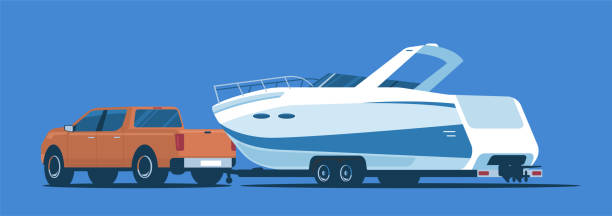
Summer in Eastern North Carolina means a lot of things — beach trips down to Atlantic Beach, weekends on the Tar and Neuse Rivers, hay cutting on family land out toward Ayden and Winterville, and a steady stream of job-site hauling for the contractors, landscapers, and farmers who keep this part of the state running.
Almost all of that involves towing.
If you're planning to pull a boat, camper, utility trailer, equipment hauler, or livestock trailer this summer, the worst time to find out your truck isn't ready is on the side of US-264 with a trailer behind you and the temperature climbing past 95.
Here's a straightforward checklist we walk our customers through at Bells Fork Truck & Auto before towing season really hits.
1. Know Your Truck's Real Tow Rating
Manufacturer tow ratings depend on cab configuration, bed length, engine, axle ratio, and whether the truck has a tow package. Two trucks that look identical on the lot can have very different tow ratings.
Before you hook up to anything, find out:
- The truck's maximum tow rating (from the owner's manual or door jamb)
- The payload capacity (also on the door jamb sticker)
- The GCWR — gross combined weight rating, which is the total of truck + trailer + everything in both
If you're shopping for a truck specifically to tow something you already own, bring the trailer's loaded weight with you. We'll help match you to a truck that can handle it without being maxed out.
2. Inspect the Hitch and Wiring
Walk around to the back of the truck and actually look at the hitch. You're checking for:
- Rust or cracks on the receiver
- A hitch pin that's clean and not seized
- A 7-pin trailer connector that isn't corroded green
- Working trailer brake controller (if you're towing anything with brakes)
Plug a trailer in and run through turn signals, brake lights, and running lights before the first trip — not at the boat ramp.
3. Check Tires Carefully — All Six of Them
Tires are where most summer towing problems start. Heat plus load plus highway speeds is hard on rubber.
Look at:
- Tread depth on all four truck tires plus the spare
- Sidewalls for cracking, bulges, or weather checking (common on trucks that sit)
- Date codes — tires older than 6 years should be replaced even if tread looks fine
- Load rating — a half-ton truck with passenger-rated tires won't handle a heavy trailer the way E-rated tires will
- The trailer's tires too — trailer tires often dry-rot before they wear out
4. Cooling System and Transmission
Towing in Eastern NC summer heat puts serious load on your cooling system and transmission. Before towing season:
- Check coolant level and condition (it should be clean, not rusty or oily)
- Look at the radiator for bent fins, debris, or leaks
- Make sure the transmission fluid is at the right level and color (bright red, not brown or burnt-smelling)
- If your truck has a transmission cooler, check the lines for leaks
If your truck has a tow/haul mode, use it. It's designed exactly for this.
5. Brakes — Truck and Trailer
You'll stop a lot harder with a loaded trailer behind you. Get the brakes inspected if:
- It's been more than a year since they were checked
- You hear any grinding, squealing, or pulsing
- The pedal feels low or soft
- The truck pulls to one side when braking
If you're towing with electric trailer brakes, test the brake controller in an empty parking lot before you hit the highway.
6. Suspension and Payload
Watch the truck when you load the trailer. If the rear end squats noticeably, you're either over the truck's payload, tongue weight is too high, or the suspension is tired. Any of those is worth fixing.
For heavier or frequent towing, ask us about trucks with:
- Heavier-duty suspension packages
- Air-assist or helper springs
- 3/4-ton or 1-ton platforms instead of half-tons
- Diesel options for sustained pulling
7. The Often-Forgotten Stuff
Before the first big tow:
- Adjust mirrors so you can see down both sides of the trailer
- Check that your registration and trailer tag are current
- Make sure you have a working spare for the trailer too
- Throw a basic emergency kit in the truck — water, flashlight, jumper cables, jack, gloves
Shopping for a Truck That Can Actually Tow What You Need?
This is where a lot of people get burned buying from big online dealers or out-of-state lots. A truck listed as "tow ready" might have the wrong axle ratio, no factory tow package, or tires that won't last the summer.
At Bells Fork Truck & Auto here in Greenville, we know what these trucks were built for, and we'll tell you straight whether the one you're looking at can handle your boat, your camper, your hay trailer, or your skid steer.
If you're getting ready for towing season and you're not sure your current truck is up to it — or you're shopping for one that is — come see us at Bells Fork Truck & Auto. We're right here in Greenville, NC, and we work with buyers across Pitt, Beaufort, Lenoir, Craven, and the rest of Eastern North Carolina.
Stop by, give us a call, or check out our current inventory online. We'll help you tow this summer without the roadside surprises.