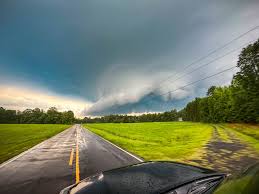
If You’ve Lived Here Long Enough, You Already Know
Eastern North Carolina has a complicated relationship with hurricane season. Anyone who was here for Floyd, Irene, Matthew, or Florence remembers what water does to this part of the state — and what it does to vehicles.
The Tar River, the low-lying areas around Greenville, and the flat terrain across Pitt, Beaufort, and Lenoir counties mean that flooding here isn’t just a coastal problem. Water can rise well inland, and it can rise faster than people expect.
Peak Atlantic hurricane season runs from roughly mid-August through October. This is the window to think about it — not when a storm is already named and headed this direction. Here’s a practical guide to protecting your vehicle, what to do if the worst happens, and how to make sure you don’t end up buying someone else’s flood-damaged truck six months from now.
Before the Season: Get Your Paperwork and Coverage Right
The most important hurricane prep for your vehicle happens long before a storm forms.
Check Your Insurance Coverage — Specifically
Flood damage to a vehicle is covered under comprehensive coverage, not collision and not liability. If you carry liability-only on a truck — which many owners of older paid-off vehicles do — flood damage is entirely out of pocket.
This is worth a phone call to your agent before September. Ask directly: if this vehicle floods, am I covered? Depending on the vehicle’s value and your situation, adding comprehensive coverage for storm season may or may not make financial sense — but you should be making that decision knowingly, not discovering the gap after the water recedes.
Document Your Vehicle Now
Take photos of your vehicle in its current condition — all four sides, the interior, the odometer, and the VIN plate. Store them somewhere that isn’t your house: cloud storage, email them to yourself, whatever works. If you ever need to file a claim, having clear pre-storm documentation makes the process substantially easier.
Keep Records Accessible
• Insurance policy number and agent contact
• Vehicle title location (and consider a photo of it)
• Registration and VIN
• Recent maintenance records showing the vehicle’s condition
📱 Do This Today: Photograph your vehicle and back the images up off-site. It takes five minutes and it is the single highest-value thing you can do before a storm ever forms.
When a Storm Is Coming: The 48-Hour Checklist
Once a storm is tracking toward Eastern NC, work through this:
☐ Fill the fuel tank early — stations run dry and lose power fast
☐ Move the vehicle to the highest ground available to you
☐ Park away from trees, power lines, and anything that can fall
☐ Avoid parking under carports or structures that may not hold in high wind
☐ If you have a garage, use it — but not if your garage is in a flood-prone area
☐ Remove valuables and important documents from the vehicle
☐ Check tire condition and pressure in case you need to evacuate
☐ Charge a portable power bank and keep a car charger in the vehicle
☐ Put together a vehicle emergency kit: water, flashlight, first aid, jumper cables, phone charger
☐ Know at least two evacuation routes that don’t rely on low-lying roads
If you own multiple vehicles, spread the risk. Parking everything in the same low spot means one flood event takes all of them.
During and Immediately After: The Rule That Matters Most
⚠️ NEVER DRIVE THROUGH FLOODWATER. Turn around, don’t drown. Just twelve inches of moving water can carry away most cars, and around two feet can move a full-size truck. Standing water also hides washed-out roadbeds, downed power lines, and debris you cannot see.
This is the part where trucks create false confidence. A lifted four-wheel-drive pickup feels invincible, and it is not. Water intrusion into the engine’s air intake causes hydrolock — which destroys an engine instantly and is almost never covered as a mechanical failure. More importantly, high-clearance vehicles still get swept off roadbeds, and every year Eastern NC sees drivers who thought their truck could make it.
If you encounter a flooded road, turn around. If your vehicle stalls in rising water, leave it and get to high ground. A truck is replaceable.
If Your Vehicle Was in Floodwater
Do not start it. This is the single most important thing to know.
Attempting to start a vehicle that has taken on water can turn recoverable damage into catastrophic engine damage. Water in the cylinders does not compress, and cranking the engine can bend connecting rods and destroy the block.
Instead:
• Do not turn the key or press start
• Disconnect the battery if you can do so safely and the vehicle is out of water
• Document everything with photos before anything is moved or cleaned
• Note the high-water line on the vehicle — how deep the water got matters enormously for the claim
• Contact your insurer as soon as possible; claim volume spikes after storms and early filing helps
• Have it towed to a shop for evaluation rather than trying to assess it yourself
Saltwater flooding is significantly more damaging than fresh water. If your vehicle was in storm surge rather than rainwater flooding, the corrosion timeline is much faster and total loss is much more likely.
The Part Nobody Warns You About: Flood Cars Enter the Market Later
Here’s what happens after a major storm hits the Southeast. Thousands of flood-damaged vehicles get totaled by insurers. Many are sold at salvage auction. And a meaningful number get cleaned up, moved across state lines, and retitled in ways that obscure the history — a practice called title washing.
Those vehicles show up on the used market six months to two years later, often looking clean. Buyers in Greenville and across Eastern NC can end up purchasing a flood car from a storm that hit Texas, Florida, or Louisiana — or one from right here.
Flood damage is uniquely bad because it doesn’t announce itself. The vehicle can drive fine for months while corrosion works through the wiring harness, control modules, and connectors. Then electrical gremlins start — and they’re nearly impossible to chase down and fix permanently.
How to Spot a Flood-Damaged Vehicle
• Musty or heavy air-freshener smell, particularly noticeable when the AC first runs
• Silt, mud, or fine grit in unusual places — under the carpet, in the spare tire well, inside the glovebox, along seat rails
• Water lines or discoloration on the interior panels, seat belts (pull them all the way out), or in the trunk
• Rust on unpainted metal in places that should never be wet — seat brackets, pedal assemblies, screws under the dash
• Fogging or moisture inside headlight and taillight housings
• Mismatched or brand-new carpet in an otherwise older, worn interior
• Electrical oddities — flickering dash lights, windows or locks that hesitate, a radio or infotainment screen that behaves unpredictably
• A vehicle history report showing the vehicle was registered in a storm-affected region during a storm year
🔍 Verification Step: Run the VIN through the National Insurance Crime Bureau’s free VINCheck tool along with a Carfax or AutoCheck report. Cross-referencing catches records that a single source may miss.
Where We Stand on This
At Bells Fork Truck & Auto, we don’t buy or sell flood-damaged vehicles. Every vehicle on our lot at 3840 Charles Blvd in Greenville carries a clean title and goes through a multi-point mechanical inspection before we offer it for sale.
That policy exists partly because we’re local. We’ve watched this region go through storms. We know families here who lost vehicles in Floyd and Matthew and Florence, and we’re not interested in being part of the pipeline that moves those problems onto the next buyer.
If you’re shopping anywhere in Eastern NC and want a second opinion on a vehicle’s history — even one you’re looking at somewhere else — come by and we’ll help you read the report. Browse our current inventory at BellsForkTruckAndAuto.com, or stop by the lot on Charles Blvd.
And before the next storm gets named: check your coverage, photograph your vehicle, and know where you’d park it. Stay safe out there.